
 | Mountain Bike
 | Trekking
 | Hiking
 | Climbing
 | Canyoning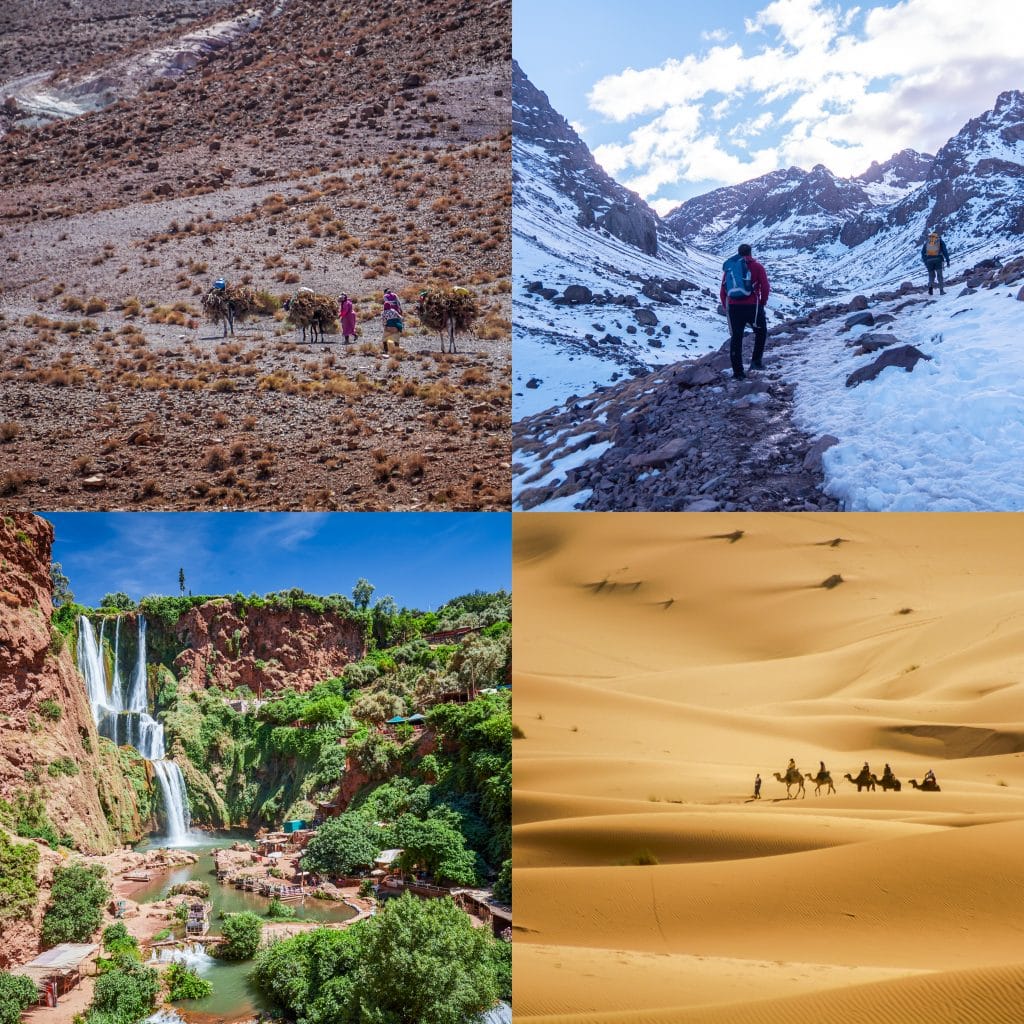
Morocco, a land of enchantment and diversity, offers travelers a myriad of experiences. From the bustling medinas of Marrakech to the serene dunes of the Sahara Desert, Morocco’s unique blend of landscapes, cultures, and climates makes it a fascinating destination. To truly make the most of your trip and explore Morocco destinations, understanding the best time to visit Morocco is essential.
This guide will help you plan your journey according to seasonal changes, regional climates, and your personal travel preferences.
Table of Contents
Why Timing Your Visit Matters
Morocco’s diverse geography, which includes the Sahara Desert, the Atlas Mountains, and the Mediterranean and Atlantic coastlines, results in a variety of climates and weather patterns. Each region experiences different weather conditions throughout the year, which can significantly affect your travel experience. By choosing the best time to visit Morocco, you can ensure comfortable weather, avoid extreme temperatures, and enjoy various activities suited to the season.
Seasonal Breakdown: When is the Best Time to Visit Morocco?
Spring (March to May): Explore Morocco Destinations in Perfect Weather
Spring is one of the most favorable times to visit Morocco. The country experiences mild temperatures and lower humidity, making it ideal for sightseeing and outdoor activities. Here’s a detailed look at what makes spring a great choice:
Weather
During spring, temperatures typically range from 18°C to 25°C (64°F to 77°F), offering pleasant conditions for exploring both cities and the countryside. The weather is generally sunny with occasional rainfall, particularly in March and April.
Activities
This is an excellent time to visit the Atlas Mountains. The snow begins to melt, revealing lush green landscapes and blooming wildflowers. Spring is perfect for hiking and trekking, as the temperatures are moderate and the trails are accessible. Additionally, this is a good time to explore Marrakech, Fes, and other historical cities with fewer crowds.
Events
Spring also hosts several cultural events and festivals. For instance, the Marrakech International Film Festival and various traditional music festivals offer a glimpse into Moroccan culture and entertainment.
Accommodation
Hotels and riads are generally less crowded during this period, allowing for a more relaxed and personalized experience. Consider staying at luxury accommodations like the Tamadot Kasbah Hotel, which provides stunning views of the Atlas Mountains and excellent service.
Summer (June to August): Explore Morocco’s Top Destinations in Comfort
Summer in Morocco can be intense, especially in the inland regions. However, the season offers unique opportunities for those who can handle the heat:
Weather:
Summer temperatures in cities like Marrakech and Fes often exceed 35°C (95°F). Coastal regions such as Casablanca and Essaouira are cooler, with temperatures ranging from 20°C to 25°C (68°F to 77°F), thanks to the Atlantic breeze.
Activities:
If you enjoy beach vacations, the coastal areas are ideal during summer. Casablanca, with its beautiful beaches and historic sites, offers a pleasant retreat from the heat. For those venturing into the desert, early mornings and late evenings are cooler and more comfortable. Summer is also the season for various music festivals and cultural events that can be enjoyed in cooler coastal towns.
Events:
The Marrakech Festival of Popular Arts and the Fes Festival of World Sacred Music are notable events that draw visitors from around the world. These festivals showcase Moroccan and international talent, providing a rich cultural experience.
Accommodation:
Due to high temperatures, many travelers opt for accommodations with air conditioning and swimming pools. The Tamadot Kasbah Hotel offers a luxurious escape from the heat, with its beautiful gardens and cool, comfortable rooms.
Autumn (September to November): Ideal Weather for Exploring Morocco Destinations
Autumn is another excellent time to visit Morocco, offering mild weather and fewer crowds:
Weather:
Temperatures range from 20°C to 28°C (68°F to 82°F), providing comfortable conditions for exploring the country. The weather is generally clear and dry, making it ideal for sightseeing.
Activities:
Autumn is perfect for exploring both urban and rural areas. The Atlas Mountains are still lush from the spring rains, and it’s a great time for hiking and outdoor activities. Cities like Marrakech and Casablanca are less crowded, allowing for a more enjoyable and leisurely experience.
Events:
The autumn months feature various local festivals and events, such as the Imilchil Marriage Festival, which offers insight into traditional Amazigh customs and celebrations.
Accommodation:
This period is less busy compared to summer and spring, so you might find better rates and availability at popular hotels and riads.
Winter (December to February): The Best Time to Explore Morocco Destinations
Winter in Morocco can be quite diverse, depending on where you are in the country:
Weather:
Coastal regions experience mild temperatures ranging from 12°C to 20°C (54°F to 68°F). In contrast, inland and mountainous areas can be quite cold, with temperatures dropping below freezing at higher elevations.
Activities:
Winter is an excellent time to visit Morocco’s coastal cities, such as Casablanca and Essaouira, where the weather remains pleasant. If you’re interested in winter sports, the Atlas Mountains offer opportunities for skiing and snowboarding at resorts like Oukaimeden.
Events:
Winter is a quieter time for tourism, which can be advantageous for those seeking a more peaceful experience. The less crowded sites allow for a more personal exploration of Morocco’s historical and cultural landmarks.
Accommodation:
While some areas might be less busy, it’s still important to choose accommodations with heating or air conditioning, especially if traveling to colder regions.
Special Considerations for Different Regions
Atlas Mountains Morocco
The Atlas Mountains are a highlight of any Moroccan itinerary. However, the climate varies significantly: Spring and Autumn: These seasons are ideal for trekking and hiking, as the weather is mild and the landscapes are lush and green.
Summer:
Higher altitudes offer cooler temperatures, making it a good time for trekking if you can handle the warmer temperatures in the lower elevations.
Winter:
Snowfall can occur, particularly at higher elevations. This is the best time for winter sports, but be prepared for cold weather.
Casablanca Tourist Attractions Casablanca is Morocco’s largest city and offers a mix of modern and historical attractions:
Weather:
Mild temperatures throughout the year make it a year-round destination. Summer is cooler compared to other inland cities.
Key Attractions:
Don’t miss the Hassan II Mosque, the Royal Palace, and the vibrant markets. Using a Casablanca map can help you plan your visits effectively.
Language and Culture Understanding what language is spoken in Morocco can enhance your travel experience. Arabic is the official language, but Amazigh is also widely spoken. French is commonly used in tourist areas and hotels. Learning a few basic phrases in Arabic or French can be very helpful.
Practical Tips for Planning Your Trip
Maps and Navigation:
Utilize a Morocco map of Africa to understand the country’s layout and plan your travels. A map of Morocco with cities and an Atlas Morocco map can be particularly useful for detailed navigation.
Travel Insurance:
Ensure you have comprehensive travel insurance that covers health, accidents, and trip cancellations.
Packing:
Pack according to the season and regions you’ll be visiting. Lightweight, breathable clothing is essential for hot weather, while layers and warm clothing are necessary for colder regions.
Health and Safety:
Stay hydrated, especially during hot weather, and be cautious with street food to avoid foodborne illnesses. Make sure you have any necessary vaccinations before traveling.
By considering these factors and choosing the best time to visit Morocco based on your preferences and interests, you can ensure a memorable and enjoyable trip. Morocco’s unique blend of landscapes, culture, and history offers a truly captivating travel experience. Whether you’re drawn to the beaches of Casablanca, the mountains of the Atlas, or the dunes of the Sahara, the right timing can make all the difference in your adventure.